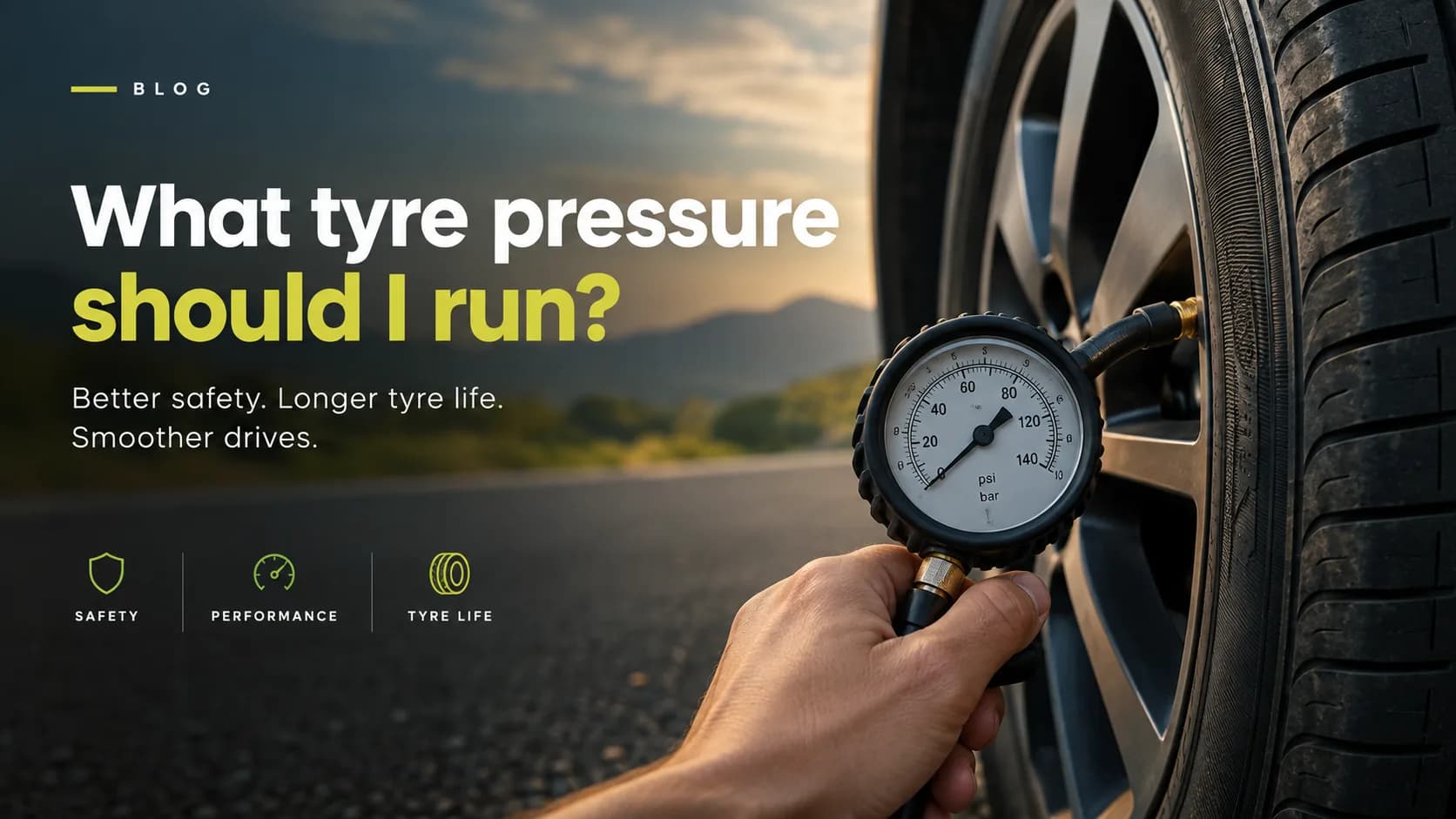
Run the pressure the vehicle manufacturer specifies, which is on a sticker in the driver’s door shut, inside the fuel filler flap or in the handbook — not the number moulded into the tyre sidewall, which is the tyre’s maximum rather than the correct pressure for your car. Most Indian cars sit between 30 and 35 psi. Check pressures cold, before driving or at least three hours after, at least once a month, and set the spare too.
The sidewall number is not your pressure
This is the single most common mistake. The pressure moulded into the sidewall is the maximum the tyre is rated for, not the pressure your car should run. The correct figure comes from the vehicle manufacturer, because it depends on the weight of the car and how that weight is distributed — which is why front and rear are often different.
Where to find the right figure
- A sticker in the driver’s door shut — the most common place.
- Inside the fuel filler flap.
- The vehicle handbook.
- Sometimes on the glovebox lid or under the bonnet.
The sticker usually gives two sets of figures: one for normal use and one for a fully laden car. Use the laden figures when the car is full of people and luggage — this genuinely matters on a long family drive, and it is the case almost everyone ignores.
Check them cold
Driving heats the air in a tyre and the pressure rises with it, typically by 3 to 5 psi. Set pressures before you drive, or at least three hours after stopping. If you can only check them warm, do not bleed air out to hit the cold figure — you will end up genuinely under-inflated once the tyres cool.
What wrong pressures actually do
| Under-inflated | Over-inflated | |
|---|---|---|
| Wear pattern | Both edges of the tread | Centre of the tread only |
| Fuel | Worse — the tyre deforms more | Marginally better |
| Grip | Vague steering, poor turn-in | Reduced contact patch, less grip |
| Ride | Softer, floaty | Harsh, and every pothole reaches you |
| Real risk | Overheating and casing failure at speed | More vulnerable to pothole damage |
Under-inflation is the more dangerous of the two. A soft tyre flexes more, and flexing generates heat; sustained highway speed on an under-inflated tyre in Gujarat summer heat is how casings fail. It is also the reason a slow puncture should be dealt with rather than topped up week after week.
Do not forget the spare A spare loses pressure sitting in the boot and is almost never checked. Discovering it is flat while changing a wheel at the roadside is a bad moment. Any SPC branch will check and set all five, including the spare, while you wait.
How often
- At least monthly.
- Before any long drive.
- When the ambient temperature changes sharply — pressure moves roughly 1 psi for every 5°C.
- Immediately if the car feels different, or a tyre looks softer than the others.
If a tyre needs topping up every few days, it has a leak. Have it found rather than living with it — a slow leak is usually a repairable tread puncture, a perished valve, or a kerbed rim, and all three are cheaper to fix than the tyre is to replace.
Common questions
What tyre pressure should I run in my car?
The pressure the vehicle manufacturer specifies, which is on a sticker in the driver’s door shut, inside the fuel filler flap, or in the handbook. Most Indian cars run between 30 and 35 psi, and front and rear are often different. Do not use the number moulded into the tyre sidewall — that is the tyre’s maximum, not the correct pressure for your car.
Should I check tyre pressure hot or cold?
Cold — before driving, or at least three hours after stopping. Driving raises the pressure in a tyre by roughly 3 to 5 psi as the air heats up. If you can only check warm, do not let air out to reach the cold figure, because the tyres will be genuinely under-inflated once they cool down.
Is it worse to over-inflate or under-inflate a tyre?
Under-inflation is more dangerous. A soft tyre flexes more, flexing generates heat, and sustained highway speed on an under-inflated tyre in summer heat is how a casing fails. Under-inflation also wears both edges of the tread and costs fuel. Over-inflation mainly wears the centre of the tread and makes the ride harsh.